21 July 2026
As discussions begin this summer about the future of the BBC, the Sandford St Martin Trust has written to the Prime Minister and MPs to encourage them to take active part in discussions about Charter Review. Of particular concern to us is the future of religious and religiously literate broadcasting.
Broadcasting and the BBC have both changed significantly over recent years. Developments in technology, audience behaviour and the growth of international media giants have all forced our public service broadcasters to change. One consequence has been a sustained decline in the quantity, quality, prominence and accessibility of religious and religiously literate programming.
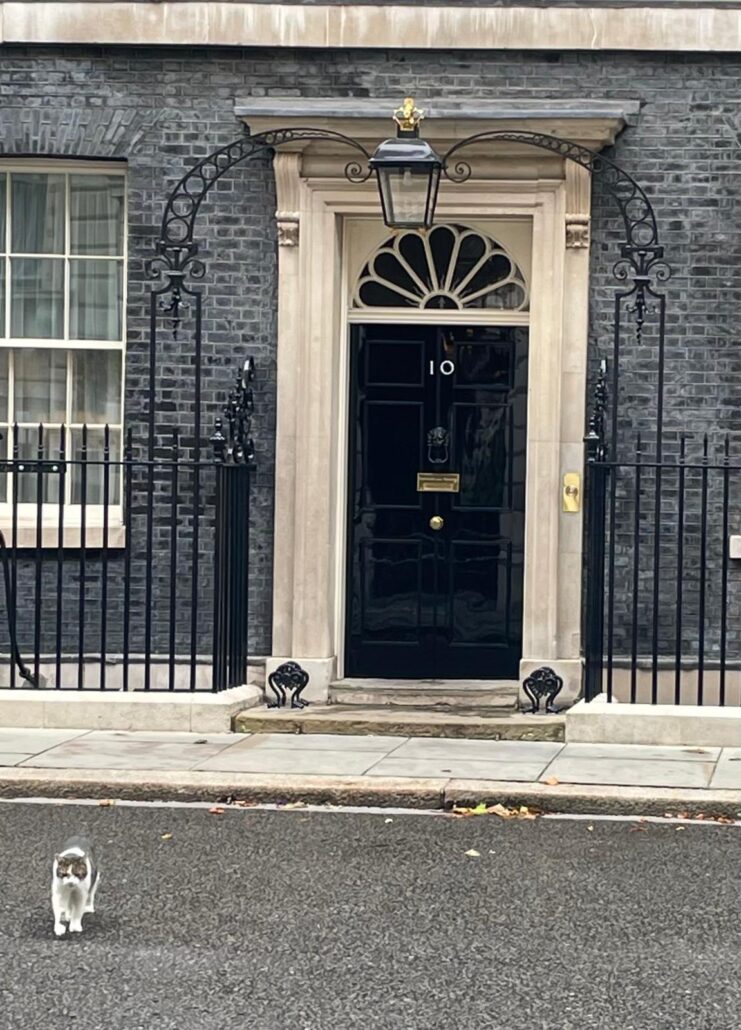
Last autumn Andy Burnham delivered the key note lecture on religion and society for the Theos think tank. He talked about his experience as an altar boy, about the influence the teachings of the former Catholic Archbishop of Liverpool has had on his politics today, and he told a story about his grandmother and how her dependance on the hospital chaplain tending her ward informed his thinking when he was Health Minister. Yesterday in his first speech as Prime Minister, he stood in front of 10 Downing Street and pledged to ‘put the care of people at the heart of everything I do.’
As the BBC Charter is developed, we hope that care extends also to providing citizens with universally accessible, religiously literate news and content which reflect all of Britain’s diverse communities. This is what we told him when we forwarded a joint letter from the Public Service Media (PSM) Forum of which we are a founding member.
This is what the co-authored PSM Forum letter said:
BBC Charter Review: Priorities for Parliament
July 2026
Dear MP
The decisions that will shape the future of the BBC are being made now. This is the point at which parliamentary engagement can have the greatest impact. Once the draft Charter is laid before the House, MPs may debate the proposals, but they cannot amend or vote to change the text.
We are a coalition of civil society organisations committed to strong public service media. As the Government develops the next Royal Charter, we hope Parliamentarians from across the House will share their views with the responsible Ministers and officials at the DCMS on the key questions that will determine the BBC’s future.
Charter Review raises important questions about how the BBC should be funded, how its independence should be safeguarded, and how it can best fulfil its public purposes in a rapidly changing media environment. These are questions on which Parliament’s voice should be heard while policy is still being developed.
The BBC must be recognised as a strategic national asset whose independence is protected through stable constitutional and governance arrangements. That includes ensuring the long-term future of services such as the World Service, strengthening safeguards against political interference in appointments and governance, and considering whether new institutional arrangements could provide greater independence in overseeing the BBC’s funding and delivery of its public mission.
A sustainable funding settlement is essential if the BBC is to continue serving audiences across the UK. The process to determine the next Charter should consider whether the licence fee in its current form is still fit for purpose or whether a more radical approach is needed that would preserve universality while ensuring fairness and long-term financial sustainability. Future funding arrangements should avoid the cycle of short-term reductions
that have characterised recent settlements, enabling the BBC to invest strategically in distinctive UK content and services. The contribution that global streaming platforms could make to supporting British storytelling and domestic production should also form part of this discussion.
The BBC must also be equipped to serve future generations in a rapidly changing media environment. Children and young people should be at the heart of its long-term strategy, supported by a regulatory framework that ensures public service media remains prominent and easily discoverable across connected TVs, streaming services and digital platforms. At the same time, mechanisms for public engagement and accountability should evolve so that
audiences have a stronger voice in shaping the BBC’s priorities.
Growth matters here too. The BBC underpins production, jobs and skills across the UK’s nations and regions, and is central to the creative economy outside London. A sustainable Charter settlement isn’t just about public service broadcasting — it’s about backing one of Britain’s genuine growth sectors.
The strength of public feeling on these issues is evident in the emails submitted to Radio Times when it invited readers to share their views on the future of the BBC and public service broadcasting. We hope you will take a moment to read some of them.
We therefore ask you to raise your views with Ministers and officials at the Department for Culture, Media and Sport now, while the Charter is still being developed. This summer Parliament can have real influence over the BBC’s future funding, governance and remit.
Once the draft Charter is laid before the House, that opportunity will have passed.
Signatories: Better Media, British Broadcasting Challenge, Campaign for the Arts, The Children’s Media Foundation, Decentred Media, International Broadcasting Trust, Media North, Media Reform Coalition, Public Interest News Foundation (PINF), The Sandford St Martin Trust, Voice of the Listener & Viewer, and, UK Coalition for Cultural Diversity



Leave a Reply