
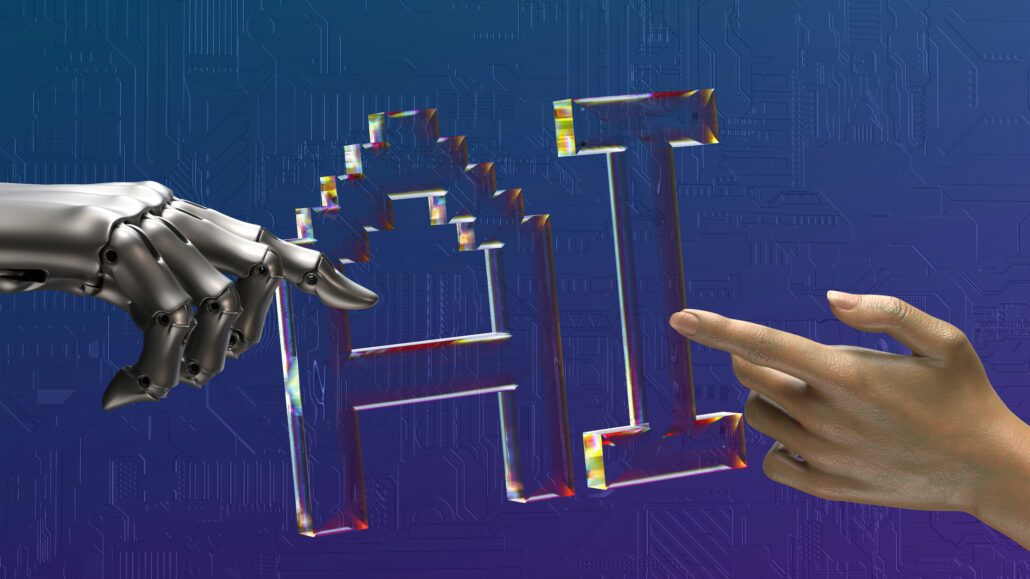
As artificial intelligence rapidly transforms how information is created and consumed, concerns are growing about its impact on truth, trust, and public accountability. In his recent encyclical, Pope Leo XIV warned that technological progress must never come at the expense of human dignity, ethical responsibility, or society’s ability to distinguish truth from manipulation. His message highlights a challenge that extends far beyond the technology sector and reaches directly into the future of journalism and broadcasting.
For an industry already under pressure from algorithms, misinformation and changing business models, the rise of AI raises a deeper question: can trustworthy reporting and content-making survive in an age where machines increasingly shape and influence public discourse?
Last year alone, more than 5,000 journalism jobs were cut across the US and UK print media sectors. Newsrooms that once relied on large reporting teams are now facing new pressures linked to declining advertising revenue and growing competition from fast-moving digital platforms.
Against this backdrop, artificial intelligence is playing an ever more active role. Some worry it is a catalyst for even greater change.
Many media companies are increasingly using AI tools to generate headlines, summarize articles, automate research and produce content at scale. While these technologies can improve efficiency, they have also raised concerns about job security, misinformation and the decline of original reporting.
And beyond these practical challenges lies a broader ethical question: what happens when information is produced without the human judgment, accountability, and moral responsibility that journalism requires?
In his encyclical, Pope Leo argued that technological systems should enhance rather than diminish human agency. In journalism, this means ensuring that AI remains a tool that supports reporters, editors, and fact-checkers rather than replacing the human judgement essential to public trust.
Caught at the intersection of financial pressure and new technology, the dangers are especially visible at major broadcasters. In April, the BBC announced a 15% cost-cutting plan that includes around 2,000 redundancies, many of them within news divisions. The move reflects a wider trend across the media landscape: traditional journalism organisations are restructuring to survive in an increasingly digital and automated world.
At the same time, local journalism continues to disappear. Communities are losing regional newspapers, local reporters, and trusted sources of information as outlets which once operated as de-facto training grounds for generations of journalists downsize or close entirely. While AI can generate content at unprecedented speed, it cannot attend council meetings, build relationships within communities, hold local institutions accountable, or understand the human realities behind a story – all of these are fundamentally human activities which form the bedrock of journalism.
AI-generated content cannot replicate or replace the performance or function of investigative journalism, human storytelling, or accountability reporting at local, national or international levels. The risk is not simply that jobs will disappear, but that we will lose skills, a work force and institutions that help citizens navigate complex realities, challenge powerful interests, and contribute to the building of a shared understanding of truth.
As Pope Leo has emphasised, technology should serve the common good. The future of journalism and broadcasting will depend not only on adopting innovative tools but also on preserving the human values that make our media indispensable: integrity, responsibility, empathy, and a commitment to truth. AI may transform how news and content are produced, but maintaining public trust will continue to depend on people.
There’s no doubt: journalism and broadcasting are industries at a crossroads—forced to find a route which will include innovation and efficiency but also the essential role journalism plays in democracy, human dignity, and the pursuit of truth. The challenge is not whether AI will shape the future of news, but how we can all ensure that this future remains centred on human beings and the public good.
The question we should all be asking ourselves is how, in a world increasingly informed by machines, we can ensure that humans have the final say when it comes to deciding what is true, what is important, and what is in the public interest?




Leave a Reply